Concrete Sidewalk Building in Malden MA - a walk built to stand up to winter
Cracked, heaved or sunken walk tripping people up? We dig out, pack a solid base and pour a new concrete sidewalk that drains.
- Fully licensed and insured.
- Free on-site estimates.
- We respond within 1 business day.
What does it take to build a new concrete sidewalk in Malden?
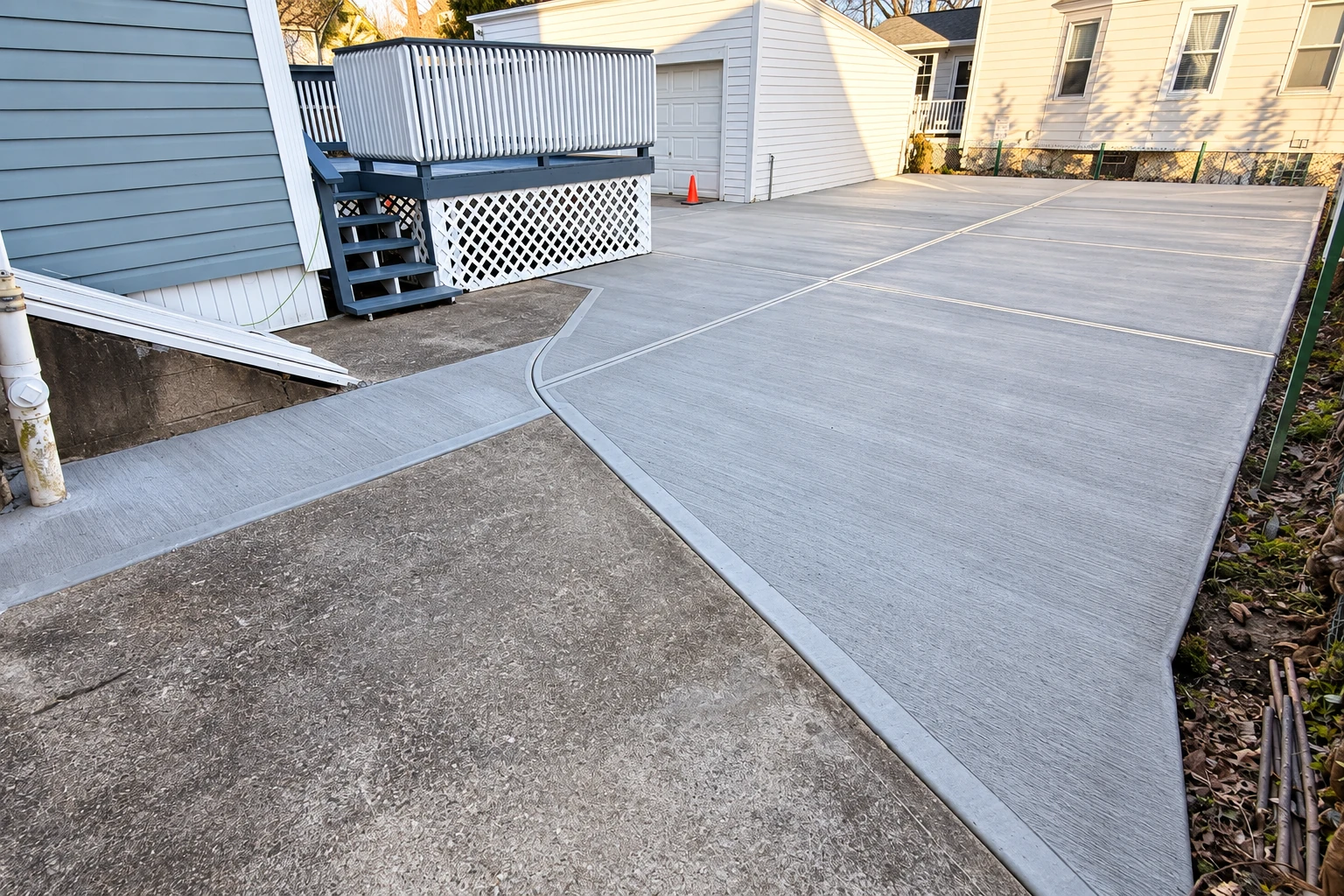
The short answer: D&L Malden Concrete Company builds new concrete sidewalks in Malden and the cities around it, breaking out the old walk if there is one, packing a firm base and pouring a walk that's sloped to shed water and jointed to control cracking.
Most calls start with a walk that's heaved, sunk or broken into pieces, or a path worn into the lawn where a walk should be. The price turns on the length and width, whether old concrete has to be broken out and hauled away, how deep we have to dig to reach firm ground, how close the truck can get, and any curves or decorative finish. The schedule turns mostly on the weather, because a walk has to go in when the season suits it, and on whether a permit is needed. The estimate spells out what's included for your walk, and if it ends at crumbling stairs, we can price new concrete steps on the same visit.
How do you know your concrete walk needs replacing?
Slabs that tip or rock
When a section rocks underfoot or one edge sits higher than the next, the base under it has usually settled or frost has pushed it up. Each winter tends to make the step worse, and a raised edge is exactly what people catch a toe on.
Cracks that keep opening
A hairline crack is normal for concrete, but one that widens, crumbles at the edges or splits the slab into pieces usually means the ground underneath has moved. Water gets in, freezes and pries it further apart, so patching tends to buy you a season rather than a fix.
Puddles sitting on the walk
Water that stays on the walk after rain means it has settled low or was poured without enough pitch, and in winter those puddles turn into ice patches. If the walk falls toward the house, that water is heading for your foundation too.
How we handle concrete sidewalk building
I start by walking the route with you and checking where the water goes, because a walk that tips toward the house sends every storm at your foundation. We break out and haul away the old walk, then dig down to the subgrade, the firm soil the walk will sit on, and take out anything soft or full of roots. A gravel base goes in and gets packed down hard with a plate compactor, since a base that's only raked level settles right along with the dirt under it. We set forms with a slight pitch away from the house, and because a walk takes freezing and thawing head on, we order a mix made for it and plan the pour around the weather, starting early on hot days so the top doesn't dry out weak and dusty. We finish with a broom finish, a light brushed texture that gives your shoes grip when it's wet, and cut control joints, shallow grooves that give the walk a planned line to crack along instead of a random one. If the budget gets tight, I'll steer you away from trimming the base, because nobody sees it on day one but it's what decides whether the walk is still flat years from now.
A new walk often meets other concrete. If it runs past the driveway to the garage, we can price garage floor concrete at the same time so the levels line up at the door. If you'd like the front walk to be more than plain gray, decorative concrete adds color, a border or a pattern on top of the same base and slab.
Plain broom-finished walk
This suits most front walks, side paths and walks to a back door, because it's the simplest to build and the texture gives good footing in the rain. It also keeps your money where it counts, in the base.
Walk with a decorative finish
This suits a front entry where the walk is the first thing people see, with color, a stamped pattern or a contrasting border. It costs more, and a patterned surface usually needs sealing and can be slicker when wet, so we often keep a broom finish down the middle where you actually walk.
What happens when you call about a new walk?
Here's how a sidewalk job runs with us, from the first call to the finished walk. Most of the work that decides how it holds up happens before the pour, in the measuring, the planning and the ground prep.
- Step 01
Call or send the form
Tell us roughly how long and wide the walk is and where it runs on your property, from the street, the driveway or the back door. We'll set a time for me to come out and see it.
- Step 02
I measure and talk it through
I measure the route, check the slope and ask how you'll use the walk, whether that's daily trips to the car or a front path for guests. You get a written estimate that spells out the mix, the joints, the drainage and what's included, so you know what you're paying for before you agree to anything.
- Step 03
We line up permits and markings
Before anyone digs or pours, we line up any permits the job needs and call to have underground lines marked. Then we pick a pour date that suits the season, so the walk isn't poured into weather that works against it.
- Step 04
We pour and explain winter care
We build and pour the walk, and once it's done I walk you through first winter care. That way you know what to put on it, what to keep off it and when.
Concrete sidewalk building in Malden: permits and ground
Malden's Department of Public Works issues the city's curb cut and street opening permits, and sidewalk building isn't on that list, so it doesn't settle whether your walk needs a permit. The DPW is the office to ask, and when a job does need one, we handle the application ourselves and keep you posted on where it stands.
Around Malden we mostly build walks at older houses on tight lots, where frost and tree roots have heaved the old walk and the side yards are too narrow for a truck to back in. When the truck can't reach, we bring the concrete in by wheelbarrow or pump so the walk still goes in as one pour, and we dig out roots and soft fill instead of pouring over them. It's the same work we do on jobs in Everett and Medford, where the lots and the winters are much the same.
Get a free on-site estimate for your new walk
We reply within one business day to set a time, then I come out, measure the route and ask how you use it. The estimate is free, and there's no obligation to go ahead.
Why Malden homeowners call D&L Malden Concrete Company
I look at every job myself
I come out to see every walk before it's priced, and our crew does the work with me on site. The person who planned your slope and joints is standing there when the forms go in.
Fully licensed and insured
We're fully licensed and insured. The state's rule for contracting work on existing, owner-occupied homes with one to four units is registration with its Home Improvement Contractor program, which also takes complaints, runs arbitration between homeowners and contractors, and can pay eligible homeowners up to $25,000 from its Guaranty Fund on an unpaid judgment against a contractor.
Since 2017, and straight about fit
I ran crews for another contractor before starting this company here in 2017, and planning the slope and joints before the first form goes in is what we're known for. If a walk isn't a good fit for your property, I'll tell you that instead of selling you one I don't think will last.
On a walk, what counts most is what's under it and where the water goes, so that's where the visit starts. Reach us through the contact page with the walk's rough size and route, and we'll set a time.
Concrete sidewalk questions we hear in Malden
What kind of concrete holds up to freezing and thawing on a walk?
Good quality air-entrained concrete holds up best, because the tiny air bubbles mixed through it give freezing water room to expand. The ready-mix concrete industry's guidance says to order it for concrete exposed to severe freezing and thawing, and a walk in Malden gets plenty of both. Ask any contractor which mix they plan to order for your walk.
What is the best time of year to pour a concrete walk in Malden?
The best time is when freezing temperatures won't reach the new walk right away. That same industry guidance urges caution about outdoor pours in late fall, winter and early spring, when fresh concrete may freeze soon after it's placed while it's still saturated. If you want a walk in spring, getting the estimate done early gives us more dates to choose from as the weather turns.
How much does a new concrete sidewalk cost in the Malden area?
A residential concrete sidewalk in the Boston area usually costs about $9 to $23 per square foot installed. Where your walk lands in that range comes down to its size, what has to come out first and the finish, and the estimate after my visit puts a price on yours. We back the work with satisfaction guaranteed on every job.
What causes a concrete sidewalk to crack?
Concrete shrinks as it hardens and moves with the ground and the weather, so cracks can't be stopped entirely, but properly designed joints control and keep them to a minimum. A walk that cracks in random places usually had its joints cut late or skipped, or a base that settled underneath. That's why we plan the joints and pack the base before anything is poured.
How do I take care of a new concrete walk its first winter?
Skip deicing chemicals on a new walk its first winter and clear ice by shoveling or scraping instead. After that, the industry guidance says to use deicers in moderate amounts and to avoid ammonium sulfate, ammonium nitrate and magnesium-based salts, which are chemically aggressive and destroy concrete surfaces. Check the label before you buy a bag.
Should I seal a new concrete sidewalk?
Sealing can help, and the industry guidance suggests a breathable sealer or water repellent made for concrete slabs, put on once the concrete is reasonably dry. It calls late summer, after a few dry days, an ideal time to do it.
Concrete work that often goes with a walk
Garage floor concrete
If your garage slab is cracked, pitted or sloped so water sits at the door, a new floor gives you a level surface to park and work on.
Decorative concrete
When plain gray isn't what you want at the front door, color, patterned borders or a stamped finish let a walk match the house and the landscaping.
Call about your new concrete walk
Call (781) 288-8155 or send the form now, because pour dates run with the weather and an early visit leaves more good ones to choose from.